GIDS news media, articles, insights and virtual events educate and illuminate its audiences so they can be fully prepared to deal with the new realities at work and in their professions.
What Breaks When Research Agents Go to Production?
Wed, April 28AI-Native SoftwareData & Intelligent SystemsReliability, Observability & Security
The hardest part of building production research agents is not generating impressive answers. It is controlling the environment in which they reason. Systems that perform well on carefully selected examples can encounter more subtle problems in real expert workflows, including incomplete evidence, excessive context, incorrect source selection, weak evidence handoffs, lost constraints, and outputs that are difficult to verify.
In this session, you will explore what breaks when research and reasoning workflows move from demonstrations into production. Drawing on experience building AI systems for knowledge-intensive and regulated environments, you will examine context engineering, tool boundaries, orchestration, evaluation loops, observability, citation-backed synthesis, human review, latency, cost, and traceability. You will also explore why larger context windows do not remove the need for context discipline, and how to decide what context each step should see, what should be excluded, how evidence should be ranked, and when missing context should trigger reflection.
What You Will Learn
Common failure modes that emerge when research agents move from prototypes into production workflows
How context engineering, tool boundaries, evidence handling, and review processes influence system behaviour
How to identify and strengthen weaknesses in production research and reasoning workflows
Who Should Attend
AI Engineers, Applied AI Practitioners, Platform Engineers, Staff and Principal Engineers, Software Architects building agent-based systems, Technical Leads responsible for AI system quality and trustworthiness, and teams developing research or knowledge-intensive workflows.
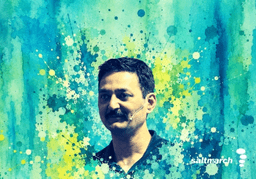
Sarang Kulkarni is a Principal Consultant at Thoughtworks with over 14 years of experience as a polyglot developer, spanning software development, data engineering, DevOps, and AI. He currently leads a healthcare client account, spearheading Generative AI initiatives that accelerate drug discovery processes by making decades of study data more accessible and actionable.
Recently, Sarang joined Thoughtworks' Global AI Service Development team, contributing to the organization's evolving AI strategy and connecting client delivery with broader strategic initiatives.
A continuous learner at heart, Sarang consistently explores emerging technologies and approaches. Beyond client work, he is an O'Reilly Media trainer specializing in productionizing RAG applications and has spoken at numerous conferences, where he is recognized for blending technical depth with practical, real-world guidance.