GIDS news media, articles, insights and virtual events educate and illuminate its audiences so they can be fully prepared to deal with the new realities at work and in their professions.
Fri, April 30AI-Native SoftwareReliability, Observability & Security
AI has significant potential in the enterprise, but reliability remains a challenge. Ask an LLM for last quarter’s total and you may get a number. Ask again and you may get a different one. Nothing necessarily throws an error. The answer simply looks like an answer. Checking that output with another model adds another probabilistic step, raising a further question: who checks the checker?
In this session, you will explore a different approach by asking what can be proved about an AI system’s output. You will work through situations where two different answers would constitute a bug, including reports, rules, identity, and validation, and examine patterns designed to provide deterministic results where they are required.
One example separates language generation from the underlying data: the model creates a template, while the data fills it in, ensuring that the numbers never pass through the language model. The resulting output is testable and provably lossless. Through these patterns, you will develop a broader toolbox for building AI systems whose outputs can be proved, audited, and trusted, while identifying which parts of a system require that level of determinism.
What You Will Learn
How to identify parts of an AI system where different answers would constitute a bug
How deterministic patterns can be applied to reports, rules, identity, and validation
How to separate language generation from data so critical values do not pass through the model
How to build AI outputs that can be tested, audited, and proved
Who Should Attend
AI Engineers, Software Architects, Enterprise Architects, Data Engineers, Software Developers, and technical leaders building AI systems where reliability, auditability, and deterministic outcomes matter.
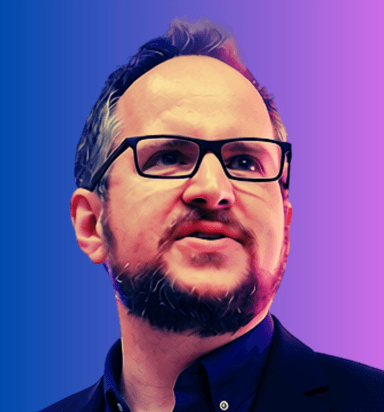
Michael Carducci is a seasoned IT professional with over 25 years of experience, an author, and an internationally recognized speaker, blending expertise in software architecture with the artistry of magic and mentalism. His upcoming book, "Mastering Software Architecture," reflects his deep understanding of the multifaceted challenges of building resilient, effective software systems and high-performing teams. Michael's career spans roles from individual contributor to CTO, with a particular focus on strategic architecture and holistic transformation.
As a magician and mentalist, Michael has captivated audiences in dozens of countries, applying the same creativity and problem-solving skills that define his technology career. He excels in transforming complex technical concepts into engaging narratives, making him a sought-after speaker and emcee for tech events worldwide.
In his consulting work, Michael adopts a holistic approach to software architecture, ensuring alignment with business strategy and operational realities. He empowers teams, bridges tactical and strategic objectives, and guides organizations through transformative changes, always aiming to create sustainable, adaptable solutions.
Michael's unique blend of technical acumen and performative talent makes him an unparalleled force in both the tech and entertainment industries, driven by a passion for continuous learning and a commitment to excellence.