GIDS news media, articles, insights and virtual events educate and illuminate its audiences so they can be fully prepared to deal with the new realities at work and in their professions.
Two Writers, One Model: Safe Shared State for Human-Agent Interfaces
Wed, April 28AI-Native SoftwareFront-End & Experience EngineeringArchitecture & Distributed Systems
What happens when a person and an AI agent can both change the same live artifact? An agent may report that it has made an edit when no tool call actually ran. A requested property may disappear because the tool schema has no field for it. Even when each component appears to work correctly, the conversation, interface, and persisted model can drift apart.
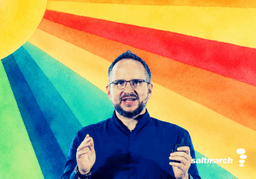
In this session, Martin O’Hanlon uses an interactive GraphAcademy course to show how his team addressed this problem. A learner builds a graph data model on a React canvas while a learning agent proposes changes through an SSE-based chat backend. Rather than allowing the agent to rewrite the model freely, changes are applied through explicit, schema-validated tools, while a separate deterministic checker assesses whether the learner’s model is complete.
You will follow the state flow between learner, agent, backend, and canvas, and examine two failures that exposed the limits of the initial design: a missing property in the tool schema and an agent claiming success without executing a tool. Through diagrams, representative schemas, and a demonstration, you will see how to make shared changes auditable, keep the interface aligned with persisted state, and determine which checks should remain outside the model’s own judgment.
What You Will Learn
How to structure agent mutations to shared application state through validated tools
Why an incomplete tool schema can silently discard user intent
How a deterministic checker can challenge an agent’s assessment of its own work
How to detect when an agent reports an action that never executed
Who Should Attend
Front-end Engineers, AI Application Engineers, and Software Architects building interactive applications in which people and agents work on the same artifact.