GIDS news media, articles, insights and virtual events educate and illuminate its audiences so they can be fully prepared to deal with the new realities at work and in their professions.
As organisations explore software factories and the use of AI to industrialise software delivery, coding agents introduce a fundamental challenge: unbounded intelligence creates an unbounded surface to verify. While that trade-off may be acceptable for everyday development, it becomes problematic when the goal is to produce repeatable outcomes for a specific class of problem.
In this session, you will explore how purpose-built harnesses can bound agent behaviour by separating exploration from adjudication. Using performance profiling and optimisation as the primary example, you will examine a system in which an agent identifies hotspots and proposes fixes while the harness determines whether the improvement is real. Each run either produces a measured gain or leaves the codebase unchanged, with regressions discarded and retried a bounded number of times before the process stops. You will also examine three principles behind this approach: bounded intelligence through exploration and adjudication, invariants and correctness, and trust through inspectable evidence.
What You Will Learn
Why purpose-built harnesses are useful when repeatable outcomes matter more than open-ended agent behaviour
How the explore-and-adjudicate model separates agent actions from outcome verification
How invariants, correctness checks, and inspectable evidence contribute to trust in AI-assisted workflows
Who Should Attend
Software Engineers, Technical Leads, Staff and Principal Engineers, Software Architects, Platform Engineers, Engineering Managers, and practitioners exploring AI-assisted software delivery and software factory approaches.
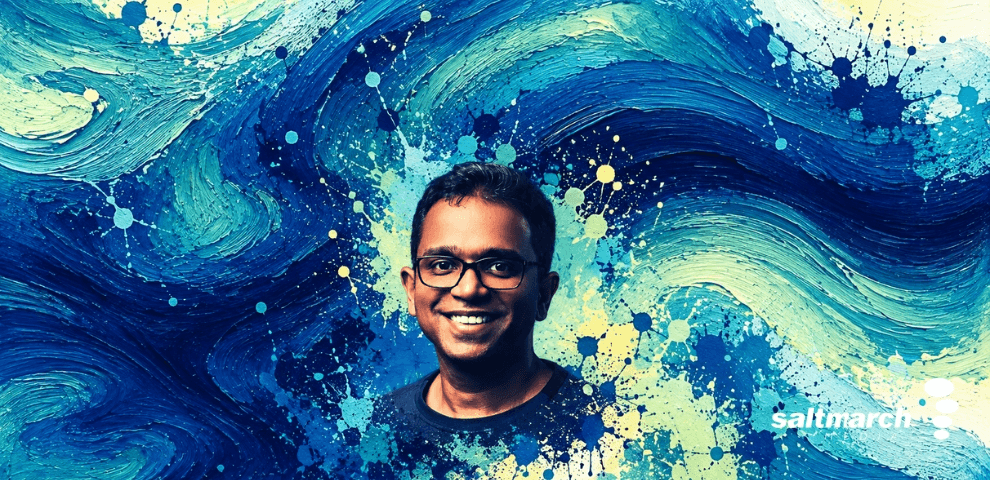
Ragunath Jawahar is the Founder of Legacy Code HQ, where he specializes in helping developers and organizations master massive, complex codebases. With nearly 15 years in the industry and 5 years working with large codebases across startups and enterprises, he discovered that software complexity is fundamentally a human comprehension problem, not just a technical one.
To solve this challenge, Ragunath has built innovative visualization tools including Eureka and Timelapse (open-sourced on GitHub), which help developers navigate complex systems by surfacing relevant information while filtering out noise. His unique expertise combines legacy codebase rescue with 2+ years of AI-assisted development experience, positioning him to address a critical emerging problem: AI's acceleration of generating hard-to-maintain codebases.
Through his work at Legacy Code HQ, Ragunath teaches developers how to harness generative AI to build production-grade applications while avoiding maintainability pitfalls—leveraging first principles from human cognition, software development, and AI. This rare combination of legacy code mastery and AI expertise makes him uniquely qualified to help teams build maintainable software in the age of AI acceleration.