GIDS news media, articles, insights and virtual events educate and illuminate its audiences so they can be fully prepared to deal with the new realities at work and in their professions.
Modern tooling makes it increasingly easy to run multiple coding agents against the same codebase, but most codebases were not structured for that way of working. As teams move beyond sequential, single-agent development towards concurrent agent workflows, the structure of the codebase itself can determine how effectively work can be divided and executed in parallel.
In this session, you will explore how different coding-agent workflows place different demands on software architecture. You will compare agents sharing a working directory with agents operating in separate git worktrees, including trade-offs around isolation, merge conflicts, duplicated dependencies, disk usage, and compute costs. You will also examine how per-feature dependency graphs and overlap analysis can identify tasks that can run in parallel, determine how work should be sequenced, and help decompose tasks to reduce conflicts during reconciliation. For teams that cannot immediately restructure existing systems, the session provides practical patterns for organising codebases to better support collaboration between multiple coding agents.
What You Will Learn
How different coding-agent workflows affect codebase structure and architecture
How per-feature dependency graphs can identify parallel work, task boundaries, and areas of overlap
How to reduce conflicts and improve collaboration between multiple coding agents
Who Should Attend
Software Engineers, Technical Leads, Staff and Principal Engineers, Software Architects, Engineering Managers, Platform Engineers supporting development workflows, and teams adopting AI-assisted software development.
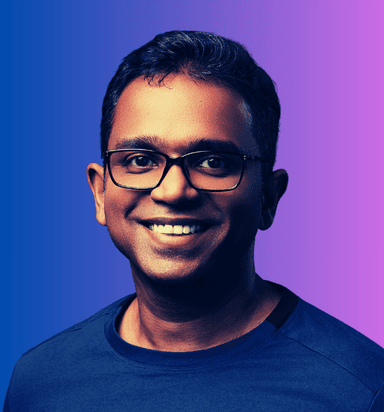
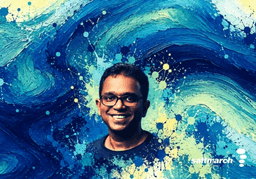
Ragunath Jawahar is the Founder of Legacy Code HQ, where he specializes in helping developers and organizations master massive, complex codebases. With nearly 15 years in the industry and 5 years working with large codebases across startups and enterprises, he discovered that software complexity is fundamentally a human comprehension problem, not just a technical one.
To solve this challenge, Ragunath has built innovative visualization tools including Eureka and Timelapse (open-sourced on GitHub), which help developers navigate complex systems by surfacing relevant information while filtering out noise. His unique expertise combines legacy codebase rescue with 2+ years of AI-assisted development experience, positioning him to address a critical emerging problem: AI's acceleration of generating hard-to-maintain codebases.
Through his work at Legacy Code HQ, Ragunath teaches developers how to harness generative AI to build production-grade applications while avoiding maintainability pitfalls—leveraging first principles from human cognition, software development, and AI. This rare combination of legacy code mastery and AI expertise makes him uniquely qualified to help teams build maintainable software in the age of AI acceleration.